Thursday, May 26, 2011
It's (almost) all good!
Two doctor visits for Peter this week. We saw his endocrinologist on Wednesday. I asked her about Peter's dramatically reduced insulin needs during the past couple of months. She said that people often have a "honeymoon" period when the pancreatic cells that are still alive start producing some insulin again after being in diabetic "shock". Eventually they will be destroyed as the other ones were, and Peter's insulin requirements will go up again.
We've decided for the time being that we are not going to do anything about Peter's puberty. We are seeing a lot of startled looks when he tells people he's 16, but he really doesn't seem to notice. He isn't asking for his body to grow up. In fact, he seems to prefer that it doesn't.
Today we saw Peter's hematologist. We got permission from the hospital's God-knows-what committee so that they can draw blood at their lab and send it to various places for research use. So when we drew blood for routine tests today, we drew an extra tube for the researchers at Rockefeller University who run the IFAR. IFAR stands for "International Fanconi Anemia Registry". Peter probably doesn't have FA, but he fits the profile perfectly, and the IFAR people say that one negative chromosome breakage test isn't conclusive. They'll actually study all the genes that are known to be implicated in FA and see if any of his match. They'll also bank his DNA for future study.
I was hoping that we could draw blood today for the chromosome testing to see if Peter has DC (Dyskeratotis Congenita), but it didn't happen. DC is even rarer than FA, and Peter fits its profile pretty well too. After FA and DC, no other genetic bone marrow failure syndromes have been named (too few cases, not enough data), but there are clearly people who have a syndrome yet do not have FA or DC.
There seem to be two major ways in which these syndromes lead to bone marrow failure. In FA, there is a defect in the DNA's built-in repair mechanism. We all take "hits" to our DNA all the time, but it normally comes with the ability to mend itself. People with FA can't do that well. So the stem cells in the marrow gradually die away. If the person doesn't die from aplastic anemia, it's from cancer due to the underlying DNA repair problem. That's why people with FA who have successful bone marrow transplants still have a shortened lifespan. They eventually get tumors which are especially hard to treat. Chemo and radiation really do a number on cells. When the DNA can't repair itself ... well, you get the picture. (If there are any scientists among you, please forgive my ignorant and awkward attempt to describe something that I don't fully understand. I think I have the overall gist right. Please correct me if I don't.)
The chromosome breakage test for FA is pretty simple. There's a particular chemical that is very hard on DNA. If someone's blood is treated with that chemical and the chromosomes quickly break into pieces, that's FA. Of course, it's never as simple as that. There are not a small number of people with FA whose chromosome breakage tests are negative. Then there are people with positive chromosome breakage tests who never show the slightest sign of bone marrow failure. Many genes have now been implicated in FA, but genes don't work alone, and there are a dizzying number of possible combinations, not only within the identified group of genes but with others not yet identified. Compared with what we'll see in another 20 years, classification of these disorders is very rough right now.
People with DC have an entirely different problem. They have short telomeres. What I've been told is that the telomeres are like the little plastic bits at the end of your shoelaces that keep the strands from unraveling. When the telomeres are short, they don't work very well. As DNA replicates and replicates over the years of a person's life, more and more strands lose their telomeres and unravel. Once again, the stem cells in the marrow gradually die off.
There's a reason why it's the stem cells that die first. The blood-producing cells in the marrow are the most rapidly growing cells in the body. Compared with other cells, they have replicated millions more times. They really need robust DNA to keep on replicating normally. When there's an underlying defect, their engine starts to falter.
Because no two cases of genetic bone marrow failure seem to be exactly alike, there's just no way to predict what's going to happen to Peter. In the near future, some of his blood will be sent to a special lab in Vancouver by some researchers at the National Institutes of Health in Bethesda. There, his telomeres will be studied. What's interesting is that there are some people with very short telomeres who don't match any of the defective genes that have been implicated in DC. So it appears that DC may be the most common of a group of disorders all characterized by telomere dysfunction.
The people at Roosevelt should have genetic testing for FA done in a few weeks. They are a research lab, not a clinical lab, so those results are not "official". By law, they can't be reported to us, and they can't go into Peter's file. But our doctor can tell us about them. If we want them to be official, we have to have them repeated by a clinical lab. If Peter does have a defect that matches one of those known to be associated with FA, I'd certainly want to get that information into the record. Whether Public Aid will pay for it is another matter. They won't pay for the genetic testing for DC nor the way-out-there telomere study. Fortunately, the people at NIH will cover the latter.
Peter is at his most perky right now. His hemoglobin is higher than it's been in 3 years. He's actually riding his bike to school again! We can't predict what will happen next, but he could stay like this for a while. His counts will go down when he gets any kind of infection or suffers major stress. At some point it will be hard to keep him well because his infection-fighting ability won't be able to recover well enough. But that could be ... gosh ... even years in the future. It is also possible that Peter's marrow is having a "honeymoon" similar to his pancreatic cells' "honeymoon". It had to work very, very hard to keep his counts up during the months when his diabetes was getting out of hand -- and indeed, it didn't entirely succeed. So we may well see a dropoff over the next six months as the honeymoon ends.
Our hematologist says that bone marrow seems to have excess capacity allowing people with very little of it to remain healthy in some cases. The rule of thumb for normal marrow is that its cellularity should be 100 - the person's age. I'm 54, so my marrow should be around 46% cellular. Peter is 16, so his should be around 84% instead of the 5% measured last November. There are actually quite a things that can cause marrow cells to die off. Auto-immune processes, exposure to certain drugs or chemicals, radiation, chemotherapy, sometimes infections. When the problem isn't genetic, there is at least the possibility for the marrow to gradually recover its cellularity. But when the problem is right inside the cell, it will eventually hit a point where its DNA can no longer replicate and then it will die. One by one, his marrow cells will inevitably hit the wall.
But back to the happy stuff! Peter will really be able to enjoy SPICE this year, though his new Indian outfits may not fit. Unfortunately, he's gained back 15 pounds, and is looking much more corpulent again. If I ask him to try the outfits on, no matter whether he can get into them or not he'll have a big screaming meltdown, insisting that they do indeed fit. So I'm just going to bring them, along with his favorite two from last year, and we'll see what happens. The weight gain is one of only two elements of this story that are not "all good". His endocrinologist would like him to go on a more restricted diet but there is no way on earth for us to make that happen. Just now it was time for his bedtime snack and he wanted a peanut butter and jelly sandwich. Well, he took in plenty of calories all day, and he's only supposed to have a 15-carb snack. Not only that: the carbs in peanut butter are fairly low, but the FAT content and calories are high. I told him he could have half a sandwich, not a whole one. He immediately started to shriek. "LEAVE! ME! ALONE!" "It's MY body!" "You never let me do ANYTHING!" "I hate this family!" It went on for a good half hour, at high soprano and maximum decibels.
I know a few of my readers have kids with bipolar disorder, so they'll understand what I'm talking about. That's the other thing that's not all good. Peter has a lot more energy now to be ragingly bipolar. Things were a lot quieter for a while. That was nice.
Thursday, April 28, 2011
A Tree Grows in Skokie
Peter's been pretty perky the last three weeks or so. He played some basketball with a neighborhood friend and actually rode his bike for quite a while last weekend. I had suspected that his counts were probably up across the board.
Well, they certainly ARE up. They are almost exactly at the level seen 3 whole years ago when we had no idea he had any issue. I don't believe he DOESN'T have a bone marrow failure disorder. Our hematologist strongly suspects the next-in-line-after-Fanconi diagnosis, a disease called Dyskeratosis Congenita. It comes with many of the same issues and anomalies as Fanconi, but the underlying genetic defect is different. We hope to test him for DC in a few weeks, once we verify that Medicaid will cover the testing. It's not cheap. The doctor said that while he hasn't actually seen a case of DC, before there was genetic testing, that would have been the presumptive diagnosis. Average life expectancy for a person with DC is mid-to-late 20s.
So my head is spinning right now. If these levels persist, then I want to get Peter back into regular gym (he's going to scream bloody murder!) I already told him that his blood is back the way it was 3 years ago, and that means there's no reason for him to feel weak and shaky any more. He completely balked at this idea, no doubt because he's really enjoyed having the "Monday morning shakies" almost every week for the past few months. No more shakies! We're going to have to talk to the school nurse and ask her not to send him home so readily if he has the Mom-made-me-go-to-school-on-Monday-but-I'm-going-to-come-home-now shakies. I'm really glad we have been keeping his life as normal as possible. It made sense.
I feel odd and awkward about the events of the past 6 months. I followed the best medical advice I was given, and that advice told me to contact Make a Wish and hospice. Now there's a tree growing in our local park for a boy that could be here in five years. Or maybe not. This is all so hard to grasp. I DO want the genetic testing, because if it is DC, that gives us a much better sense of Peter's trajectory. And then shouldn't we return to our plan of starting hormone treatments so that Peter can go through puberty? If he's likely to live for several more years, or even a decade, then he needs to become a man. He shouldn't be a permanent 4th grader with a little boy's voice. He deserves all the dignity we had originally wanted for him.
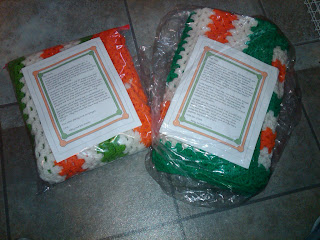
We have a comfort blanket and a comfort shawl from a dear friend at SPICE, to help both of us go through the challenges that were facing us. Now I feel like a charlatan, like the mom who cried wolf! But I saw the numbers, and the direction they were going. Peter's sugar was a little high but not in the diabetic range in October of '10. But his blood counts were already low enough for a diagnosis of aplastic anemia. And his biopsy -- only 5% cellularity. How long can a kid live with only 5% of his bone marrow? Oh, this is all so darned hard! Do we dare celebrate? And that tree -- can I drive by the park and not feel embarassed that it's there?
Sometimes even the best news makes a person cry.
Saturday, April 16, 2011
Dubai and after
| Peter and Gokul-Uncle |
| Peter and Sheela-Aunty |
Peter's trip to Jordan, Dubai and Sharjah
Peter and I returned from Dubai on Sunday April 3rd. We both caught colds from Sheela-Aunty and Gokul-Uncle, but despite his low white blood cell count, Peter weathered it much better than I did. What a nasty piece of work!
Flying on Royal Jordanian was an interesting experience. At our gate in Chicago, we watched some of our fellow passengers facing Mecca and praying while waiting for the flight to depart. When it came time to board, a dozen TSA officers formed a gauntlet through which we all had to pass. Every passenger was carefully scrutinized, to say the least. My feelings were mixed. On the one hand, I have struggled with Islam since well before 9/11, and when the attacks happened, I knew that life would forever be divided into pre- and post-horror. On the other hand, most of the travelers (beards, skullcaps, hijabs and burkas not withstanding) spoke with American accents. I can only imagine how awful it must feel to be an Arab-American right now.
Despite all the uprisings in the middle east, things were fine during our transit through Amman, Jordan. We had a great lunch at a restaurant in the airport topped off by exquisite gelato. (The middle east seems to be full of exquisite gelato!) The food on the flight was particularly odious, so it was a very good thing that I had packed oodles of snacks for Peter. I needed him to keep eating every couple of hours so that his long-acting insulin wouldn't bring his blood sugar too low. It was a constant battle.
It was a crabby trip for Peter. Unlike our trip to India, he was touchy and inflexible most of the time, and entirely fixated on food. Indian people have a wonderful way of living in the moment and their relationship to time is much more fluid than ours. It's one of the things I love most about visiting India, or Indian friends wherever they may be. It's therapeutic for someone like me to not live by the clock all the time. But Peter -- oh my goodness, the moment he finished breakfast, he'd start hounding me about lunch. Fortunately he enjoyed idlis from Gokul-Uncle's restaurant for breakfast, and was even more delighted with the homemade french toast that his aunty and uncle made him. Most of the time we were out and about for lunch, and since one of Dubai's greatest attractions is its malls, he got to have his fill of American fast food. Oy, the food courts! In the evenings we ate at Gokul-Uncle's Indian vegetarian restaurant most of the time, but Peter turned up his nose at most of its offerings. On the last day, he declared that the pakoras (vegetable fritters), Hakki noodles, fresh watermelon juice, cheese sandwiches and ice cream were delicious, but along the way he was most unpleasant. I tried to rein him in, beginning with the first meltdown at Amman airport, but his aunty and uncle indulged him completely once he turned on the waterworks.
But never mind all that. Dubai is a splendid place to visit this time of year, with the brightest sunlight, blue sky, turquoise sea, and light-colored buildings -- the total antithesis of Chicago. We visited the only 7-star hotel in the world (Burj al Arab), went to the top of the tallest building in the world (Burj Khalifa), spent time at an amazing "kid's village" (Kidzania at the Mall of Dubai), visited a falconry center on the outskirts of Dubai, observed the antics at a huge ice rink AND SKI AREA (!!!) inside the Mall of Dubai, took some nice strolls and admired the yachts along Dubai Creek, shopped here and there, drove over to Sharjah (another emirate) to see the exquisite new University there, spent a wonderful few hours at Sharjah's Arabian Wildlife Center, took in the most exciting sound-and-light show I've ever seen at another mall, watched India beat Pakistan in the World Cup cricket semi-final, swam in the Arabian sea, ate delicious ice cream and gelato whenever we felt like it, and then joined with Indians all over the world to watch the Indian cricket team WIN THE 2011 WORLD CUP!!!!!! It was an amazing match against Sri Lanka, more riveting for me than Peter, but we both loved seeing all the people dancing in the streets, honking their horns, beating drums and screaming afterwards. It was a real party that night at Gokul-Uncle's restaurant.
Peter missed a week of school after the trip because of his cold, but he's been quite perky since. I wonder if his red count is up ...? We'll know in a couple of weeks. On the trip to Dubai, I found that I needed to give him less and less insulin every day. That has continued here at home. We're down from 14 to 10 units of long-acting insulin every morning, and instead of giving him another 25 or so during the day, we're down to less than 10. It'll be interesting to hear what his endocrinologist has to say about that.
We postponed and then changed our Make-a-Wish trip based on the sense that Peter will be here longer than expected, and input from the MAW people about our initial plan. We will definitely go out to CA to visit our Indian relatives there before the year is out, but Peter decided he'd like to see Harry Potter World at Universal Studios in Florida. The folks at MAW offered their "standard" (amazing) weeklong family package, including all transportation, accomodation, meals, free passes to Disney (3 days), Universal Studios (2 days) and Seaworld (1 day). We'll be staying in a special village just for MAW kids and their families. We won't have to wait in any lines. What an amazing experience this will be. We're trying to set things up for the week beginning on Labor Day, since the parks will be less crowded then and the weather will be a bit cooler than during the peak of the summer. Leo, Annie, Peter and I will be going. Dr. Goodell, Peter's hematologist, thinks it's good that we're not going to postpone the trip too much. Nothing is ever predictable.
Last weekend after doing some more research on the web to assuage my thirst for information about bone marrow failure syndromes, I realized that we were missing an opportunity if we didn't enroll Peter in some studies. Peter himself doesn't have anything to gain in terms of his treatment or prognosis, but these are orphan diseases, and there are only a few hundred new cases a year. Researchers are finding that there are a lot more genes involved than they once thought, and there are several different ways in which the DNA strands can be damaged. Ultimately, the cure for these diseases will be gene therapy, wherein healthy genes will be introduced into a kid's marrow via some kind of host such as a harmless virus. Right now we're probably 20 years away, but the work is still progressing quite rapidly. But the scientists need as many data points as they can.
So, I decided that it would be a good idea to offer Peter's DNA to those who can make productive use of it. I wrote up a brief summary of his case, and then Googled "bone marrow failure syndromes genetic research". It didn't take long to find the top 12 researchers around the world along with their email addresses. I knew that these people probably don't hear directly from parents very often, but I thought that one or two might get back to me with some interest. However, within 72 hours, ALL TWELVE had written back to say they would love to get a sample of Peter's DNA. This is relatively simple, because we can draw an extra vial of blood for one of them each time we do a blood draw to test his levels. But clearly we can't work with 12 different researchers ... so I've selected a study (DNA bank) at NIH in Bethesda, Maryland, another at Rockefeller University in NY, and a third at Queen Mary's College in London, where the head researcher is Indian, and particularly interested in getting more Indian DNA.
I've been busy gathering Peter's records all week so that I can send copies to each of the study nurses who handle the paperwork. I've been working on paperwork to authorize their use of the DNA and reading up on the specific research they are doing. In each case, they will be examining Peter's genetic material to see if his defects match those that have been identified to date. One interesting learning is that it is still quite possible that he does have Fanconi Anemia. FA turns out to be a much more complex disorder than previously thought, and it is not unusual to get a false negative on the first line test. Another possibility is Dyskeratosis Congenita, the next most common disorder after FA. (Of course, these are both extremely rare). If he does not match any of the known defects, then his DNA will be banked for future use.
There is a skin biopsy for FA and a telomere study for DC that I believe our insurance will cover. Dr. Goodell had mentioned them before, but it was my thinking that there was no point in doing more testing because it wouldn't change anything -- for Peter. Now I think differently. There is a point. The day the first child is cured of bone marrow failure with gene therapy, Peter and all the other kids whose cells supported critical breakthroughs will be right there. Peter's life will have made a difference not just to our family and friends but to other kids and families we'll never know.
(Regarding telomeres, I believe they are the "caps" at the ends of the strands of DNA, but I'm a bit out of my league ... and I'm not 100% sure whether DC is the only syndrome with a telomere defect. I'm sure Dr. Goodell will give me a layman's summary the next time we see him).
Apparently NIH will bring us to Bethesda at some point to do a full workup on Peter. I think they'll be looking at every organ system, but there won't be anything more invasive than a blood draw. In fact, I've always wanted to see an MRI of Peter's brain, because his cognitive deficits are so unusual. We'll turn the whole thing into a fun holiday where Peter's whims can be indulged in exchange for visiting with the docs. My brother Russell owns a geodesic dome house not far from Bethesda, and he says he can give us a key if we'd like to stay there. More likely we'll be in a hotel attached to the NIH facility, but it's nice to know it's there.
I am very optimistic about finishing my online paralegal course (which I plan to start around May 1) and starting my new career before Peter falls ill. More importantly, SPICE is coming up in June, and it will be a sweet, sweet, sweet time for all of us. I probably won't be posting too frequently for the next few months, but in the back of my mind, I know I'll be needing your prayers by and by. Thanks for following Peter's journey with me.
Friday, April 15, 2011
Our Excellent Indian Adventure
Technology is an amazing thing. It has turned me into an artist. ME!!! An artist!?? This 12x12 hardcover book will be wonderful to share at SPICE. If you want to read the captions, click the link at the bottom of this post and then choose the full-screen option. The tools Shutterfly offers for self-publishing are truly amazing.
Thursday, March 24, 2011
A new perspective
Today we visited Dr. Goodell, Peter's hematologist, as a follow-up from our last conversation when Peter was hospitalized for his diabetes.
Peter had his blood tested again last week, and his counts showed some recovery from the low point they hit right after his diabetic crisis. We were very surprised to see his platelets up to 40, when they were only 14 a few weeks earlier. I asked Dr. Goodell to do another test this morning to verify the platelet count, since Peter and I leave tomorrow for Dubai, and it's helpful to know where things stand. The results were interesting. Peter's white count dipped again (in just a week), red remained unchanged, and platelets were a whopping 43!
Dr. Goodell has reminded me more than once that with numbers this small, they have to drop quite a bit before you can say that they've really changed. The measurements just aren't that precise. Also, blood counts can bounce around a lot on their way down. We had already seen some of that, but never in the platelets. 14 in platelets is getting to the point where spontaneous bleeds can occur, but 43 is fairly safe.
Peter's red count and hemoglobin (the protein in red cells that carries iron and transports oxygen) are pretty low and that explains why he sometimes feels weak and shaky. He does get winded easily these days. Dr. Goodell says we might see some recovery in the red and hemoglobin in a month or two. Red cells have a lifespan of 100-120 days and what we're seeing now is still impacted by the severe untreated diabetes of a month ago.
White count can bounce a lot faster than red count and hemoglobin because white cells have a lifespan of 13-20 days. Last week we saw a nice recovery and now Peter's white count is the lowest we've seen. The infection-fighting component of his white blood cells is pretty low, so he's susceptible to infection. I'll have to keep his hands well sanitized on our trip.
Platelets can bounce a lot even from week to week, because their lifespan is only 8-10 days. We're seeing a very nice uptick now but it could just as easily drop again ... and then go back up ... and then heaven only knows.
The BIG news is that we have some new information that changes everything. Right after Peter's aplastic anemia was diagnosed, we went on a fishing expedition for older blood tests that could tell us how long Peter might have been living with his condition. This was important, because it could have given us an indication of the pace of his downward slide. Unfortunately, we couldn't find anything in his pediatrician's file. Peter was not a boy we wanted to poke unless it was absolutely necessary. And it wasn't necessary!
BUT: Back in April of 2008, Peter saw a pediatric gastroenterologist at Advocate Lutheran Children's Hospital, the same place where his hematologist and endocrinologist have their offices. He's had chronic poop problems, and I wanted to rule out celiac disease (gluten intolerance). I had totally forgotten that the GI doc had ordered a blood test.
Apparently those test results were never entered into the hospital's "system", so they were invisible to all of us ... UNTIL ... a med student working with Dr. Goodell found them at the bottom of Peter's paper file. Dr. Goodell couldn't wait to show them to me. Peter CLEARLY showed the signs of aplastic anemia three whole years ago! This means that he has been living with low counts for a long time with no apparent symptoms. Despite the bounces we've been seeing in the past 5 months, his decline has been slow and gradual. There is NO reason to think that it won't continue that way!
It's pretty obvious that the GI doc never looked at the results, because I should certainly have gotten a phone call telling me to see a hematologist. (In retrospect, that's actually a blessing, because Peter would have been getting a lot more blood tests during the 2.5 years when we didn't know about his condition.)
Suddenly the frame of reference is entirely different. I can't say that I have a dying kid anymore. What I have is a kid with a chronic condition who is NOT SICK! Dr. Goodell says there's a good chance Peter could hang in for a year, or two, or even three. He could also go into a steady decline at any point. But based on the data we have, we're not expecting that for a while.
PETER WILL UNDOUBTEDLY GO TO SPICE!
Ironically, our hospice nurse came with us to this morning's appointment so she could introduce herself to Dr. Goodell. Now we're putting hospice on hold for a while, though we'll still stay in touch so that we can re-initiate his case at any time.
Last weekend, the people from Make-a-Wish came to see us, and we started to plan a trip to California in May so that Peter could see all of his special relatives who live there. (That's my boy ... forget Disneyland, I want to see my cousins!) Now I think I'll put that on hold for just a little while, since we're going to Dubai now and we'll be going to SPICE in June. Dr. Goodell thinks we should do the Make-a-Wish trip fairly soon while Peter is still feeling well, so early fall seems like a good time.
Since Peter's hemoglobin is still very low, Dr. Goodell talked to me again about transfusions. Initially we had decided that we wouldn't start transfusions, because there's no end game. How could you ever decide to stop? It just seemed better to never start. But now Peter's platelets (which were our gravest concern) are back up to 43, higher than when his condition was diagnosed. His white count is low, but he is NOT SICK. Things aren't likely to go downhill quickly. So why not give him some red blood cells now and then to make him a little more perky? He's got time! Let's make it even better!
We were prepared to give him a transfusion today, so that he could be at his perkiest while we're in Dubai. Dr. Goodell talked to him about it, but Peter had been stuck three times already (once for CBC, once for cross-match, and once when they couldn't find a vein). Peter was adamant: NO MORE POKES! But we'll be visiting Goodell again in a month, and if Peter's hemoglobin is still very low, we'll try persuading him again. It did take a shot of Atavan to get his I.V. in when he went to the hospital for his diabetes ... but maybe if we bribe him he'll go for it. I'm already talking with him about it in bits and pieces so that he starts getting used to the idea.
As for the end-game, Dr. Goodell said he'd been thinking a lot about that. He said that in his experience, the kid is the one who tells him when it's time to stop transfusions. At some point, Peter is going to start being sick. He'll get infections, run fevers, bruise easily, get nosebleeds ... and we'll recognize that it's time to stop. That was a persuasive argument to me, and our hospice nurse agreed. This has always been about Peter living as as long as possible as a happy, healthy boy.
To everyone who's been praying, I just ask you to keep on doing what you're doing. Every extra month is a gift. The future may still be uncertain, but I'll take it exactly the way it is right now!
Peter had his blood tested again last week, and his counts showed some recovery from the low point they hit right after his diabetic crisis. We were very surprised to see his platelets up to 40, when they were only 14 a few weeks earlier. I asked Dr. Goodell to do another test this morning to verify the platelet count, since Peter and I leave tomorrow for Dubai, and it's helpful to know where things stand. The results were interesting. Peter's white count dipped again (in just a week), red remained unchanged, and platelets were a whopping 43!
Dr. Goodell has reminded me more than once that with numbers this small, they have to drop quite a bit before you can say that they've really changed. The measurements just aren't that precise. Also, blood counts can bounce around a lot on their way down. We had already seen some of that, but never in the platelets. 14 in platelets is getting to the point where spontaneous bleeds can occur, but 43 is fairly safe.
Peter's red count and hemoglobin (the protein in red cells that carries iron and transports oxygen) are pretty low and that explains why he sometimes feels weak and shaky. He does get winded easily these days. Dr. Goodell says we might see some recovery in the red and hemoglobin in a month or two. Red cells have a lifespan of 100-120 days and what we're seeing now is still impacted by the severe untreated diabetes of a month ago.
White count can bounce a lot faster than red count and hemoglobin because white cells have a lifespan of 13-20 days. Last week we saw a nice recovery and now Peter's white count is the lowest we've seen. The infection-fighting component of his white blood cells is pretty low, so he's susceptible to infection. I'll have to keep his hands well sanitized on our trip.
Platelets can bounce a lot even from week to week, because their lifespan is only 8-10 days. We're seeing a very nice uptick now but it could just as easily drop again ... and then go back up ... and then heaven only knows.
The BIG news is that we have some new information that changes everything. Right after Peter's aplastic anemia was diagnosed, we went on a fishing expedition for older blood tests that could tell us how long Peter might have been living with his condition. This was important, because it could have given us an indication of the pace of his downward slide. Unfortunately, we couldn't find anything in his pediatrician's file. Peter was not a boy we wanted to poke unless it was absolutely necessary. And it wasn't necessary!
BUT: Back in April of 2008, Peter saw a pediatric gastroenterologist at Advocate Lutheran Children's Hospital, the same place where his hematologist and endocrinologist have their offices. He's had chronic poop problems, and I wanted to rule out celiac disease (gluten intolerance). I had totally forgotten that the GI doc had ordered a blood test.
Apparently those test results were never entered into the hospital's "system", so they were invisible to all of us ... UNTIL ... a med student working with Dr. Goodell found them at the bottom of Peter's paper file. Dr. Goodell couldn't wait to show them to me. Peter CLEARLY showed the signs of aplastic anemia three whole years ago! This means that he has been living with low counts for a long time with no apparent symptoms. Despite the bounces we've been seeing in the past 5 months, his decline has been slow and gradual. There is NO reason to think that it won't continue that way!
It's pretty obvious that the GI doc never looked at the results, because I should certainly have gotten a phone call telling me to see a hematologist. (In retrospect, that's actually a blessing, because Peter would have been getting a lot more blood tests during the 2.5 years when we didn't know about his condition.)
Suddenly the frame of reference is entirely different. I can't say that I have a dying kid anymore. What I have is a kid with a chronic condition who is NOT SICK! Dr. Goodell says there's a good chance Peter could hang in for a year, or two, or even three. He could also go into a steady decline at any point. But based on the data we have, we're not expecting that for a while.
PETER WILL UNDOUBTEDLY GO TO SPICE!
Ironically, our hospice nurse came with us to this morning's appointment so she could introduce herself to Dr. Goodell. Now we're putting hospice on hold for a while, though we'll still stay in touch so that we can re-initiate his case at any time.
Last weekend, the people from Make-a-Wish came to see us, and we started to plan a trip to California in May so that Peter could see all of his special relatives who live there. (That's my boy ... forget Disneyland, I want to see my cousins!) Now I think I'll put that on hold for just a little while, since we're going to Dubai now and we'll be going to SPICE in June. Dr. Goodell thinks we should do the Make-a-Wish trip fairly soon while Peter is still feeling well, so early fall seems like a good time.
Since Peter's hemoglobin is still very low, Dr. Goodell talked to me again about transfusions. Initially we had decided that we wouldn't start transfusions, because there's no end game. How could you ever decide to stop? It just seemed better to never start. But now Peter's platelets (which were our gravest concern) are back up to 43, higher than when his condition was diagnosed. His white count is low, but he is NOT SICK. Things aren't likely to go downhill quickly. So why not give him some red blood cells now and then to make him a little more perky? He's got time! Let's make it even better!
We were prepared to give him a transfusion today, so that he could be at his perkiest while we're in Dubai. Dr. Goodell talked to him about it, but Peter had been stuck three times already (once for CBC, once for cross-match, and once when they couldn't find a vein). Peter was adamant: NO MORE POKES! But we'll be visiting Goodell again in a month, and if Peter's hemoglobin is still very low, we'll try persuading him again. It did take a shot of Atavan to get his I.V. in when he went to the hospital for his diabetes ... but maybe if we bribe him he'll go for it. I'm already talking with him about it in bits and pieces so that he starts getting used to the idea.
As for the end-game, Dr. Goodell said he'd been thinking a lot about that. He said that in his experience, the kid is the one who tells him when it's time to stop transfusions. At some point, Peter is going to start being sick. He'll get infections, run fevers, bruise easily, get nosebleeds ... and we'll recognize that it's time to stop. That was a persuasive argument to me, and our hospice nurse agreed. This has always been about Peter living as as long as possible as a happy, healthy boy.
To everyone who's been praying, I just ask you to keep on doing what you're doing. Every extra month is a gift. The future may still be uncertain, but I'll take it exactly the way it is right now!
Wednesday, March 16, 2011
Wrapped in love
I just opened a package that came to the door, and inside were a comfort blanket for Peter and a comfort shawl for me. My dear SPICE friend Patty Reents crocheted them by hand in the colors of the Indian flag, and sent them on behalf of all of SPICE.
Peter is out with his bike for the first time this year. This is the note he'll see when he comes in:
Dear Peter,
I crocheted this prayer, or comfort, blanket just for you. I heard from your mom about what you are going through with your diabetes. I'll tell you a secret --- I hate needles, too! So I made you this blanket to comfort you when you are feeling sad or scared. I made it in the colors of the Indian flag to remind you of SPICE and of your trip to India. I prayed as I crocheted the blanket that you would not be scared and would find comfort in everyone who loves you.
I told everyone at SPICE that I was making this blanket for you and that I wanted it to be from everyone at SPICE along with … my family. Some people sent notes for you to send with the blanket. But everyone is thinking about you and sending lots and lots of good wishes in their hearts.
So when you feel scared or upset, wrap yourself up in this blanket and think of all the good times at SPICE and in India. Think of all your friends at SPICE --- kids and grown-ups. We all love you very much! Wrap this blanket around you and let it feel like a gigantic hug from all of us.
With lots of love,
Patty and Bill
Someday I plan to share my shawl with someone else from SPICE who needs comfort. Then it can be passed to the next person. I know the prayers woven into it will never run out.
Sent from my Verizon Wireless BlackBerry
Peter is out with his bike for the first time this year. This is the note he'll see when he comes in:
Dear Peter,
I crocheted this prayer, or comfort, blanket just for you. I heard from your mom about what you are going through with your diabetes. I'll tell you a secret --- I hate needles, too! So I made you this blanket to comfort you when you are feeling sad or scared. I made it in the colors of the Indian flag to remind you of SPICE and of your trip to India. I prayed as I crocheted the blanket that you would not be scared and would find comfort in everyone who loves you.
I told everyone at SPICE that I was making this blanket for you and that I wanted it to be from everyone at SPICE along with … my family. Some people sent notes for you to send with the blanket. But everyone is thinking about you and sending lots and lots of good wishes in their hearts.
So when you feel scared or upset, wrap yourself up in this blanket and think of all the good times at SPICE and in India. Think of all your friends at SPICE --- kids and grown-ups. We all love you very much! Wrap this blanket around you and let it feel like a gigantic hug from all of us.
With lots of love,
Patty and Bill
Someday I plan to share my shawl with someone else from SPICE who needs comfort. Then it can be passed to the next person. I know the prayers woven into it will never run out.
Sent from my Verizon Wireless BlackBerry
Tuesday, March 15, 2011
Shaky
With a threatening nuclear disaster in Japan as a backdrop, life feels pretty shaky here right now.
Peter keeps waking up with a swollen face. Yesterday we let him stay home because he was embarassed, but we decided he couldn't stay out forever. It's not painful, just puffy, so that his eyes are little slits. It goes down by the end of the day. Allergy medicine doesn't seem to help.
So this morning, Carl got him up for school and then let him sleep longer when he said he was feeling weak and shaky. I got him up a couple of hours later so he could eat some breakfast and keep his blood sugar up. He went willingly off to school soon after, but then realized his water bottle was downstairs and hurried down to get it. When he got back up, he leaned on Carl a little saying, "Daddy, my heart is pounding so fast!"
Carl and I just say, "Mmm hmm" when he mentions things like that. What else can we say?
Just now a representative of Make a Wish called to set up an appointment to meet us on Saturday. Peter asked who was on the phone, so I asked him if he had heard of Make a Wish. He said no. I said, "Well, it's a group of people who give wishes to people like you. You know, like having all those blood tests because your blood is sick. You get to choose where you want to go, or what you want to do."
"I don't WANT a wish."
"Oh, I think you should wait and talk to the man from Make a Wish before you say that. Isn't there some place you'd like to go?"
"NO!" (typical Peter)
"How about going to California to see Shilpa and Sanju and Sahil and Aisha?"
"Oh, yeah, I want to see Shilpa and Sanju! That's what I want. But nothing else."
"Hey, we could go to Disneyland while we're out there."
"No. We WENT to Disneyland."
"Wait, that was Disneyworld, in Florida! Disneyland is in California. It's different."
"No it isn't! I don't want to go to Disneyland. It's MY CHOICE!"
At this point, it was obvious that the conversation had gone on far too long already, and it was my fault. But just like it is typical Peter to be contrary about anything special he is offered, it is also typical Peter that his biggest wish would be to see his Indian cousin and her family. Shilpa is the daughter of Sheela, my Indian sister, who we will be visiting in Dubai later this month. When I was an exchange student in India in '73-'74, Sheela was 18 and just starting her medical training.
That reminds me -- Peter needs t-shirts! Everything he has is too big!
Peter keeps waking up with a swollen face. Yesterday we let him stay home because he was embarassed, but we decided he couldn't stay out forever. It's not painful, just puffy, so that his eyes are little slits. It goes down by the end of the day. Allergy medicine doesn't seem to help.
So this morning, Carl got him up for school and then let him sleep longer when he said he was feeling weak and shaky. I got him up a couple of hours later so he could eat some breakfast and keep his blood sugar up. He went willingly off to school soon after, but then realized his water bottle was downstairs and hurried down to get it. When he got back up, he leaned on Carl a little saying, "Daddy, my heart is pounding so fast!"
Carl and I just say, "Mmm hmm" when he mentions things like that. What else can we say?
Just now a representative of Make a Wish called to set up an appointment to meet us on Saturday. Peter asked who was on the phone, so I asked him if he had heard of Make a Wish. He said no. I said, "Well, it's a group of people who give wishes to people like you. You know, like having all those blood tests because your blood is sick. You get to choose where you want to go, or what you want to do."
"I don't WANT a wish."
"Oh, I think you should wait and talk to the man from Make a Wish before you say that. Isn't there some place you'd like to go?"
"NO!" (typical Peter)
"How about going to California to see Shilpa and Sanju and Sahil and Aisha?"
"Oh, yeah, I want to see Shilpa and Sanju! That's what I want. But nothing else."
"Hey, we could go to Disneyland while we're out there."
"No. We WENT to Disneyland."
"Wait, that was Disneyworld, in Florida! Disneyland is in California. It's different."
"No it isn't! I don't want to go to Disneyland. It's MY CHOICE!"
At this point, it was obvious that the conversation had gone on far too long already, and it was my fault. But just like it is typical Peter to be contrary about anything special he is offered, it is also typical Peter that his biggest wish would be to see his Indian cousin and her family. Shilpa is the daughter of Sheela, my Indian sister, who we will be visiting in Dubai later this month. When I was an exchange student in India in '73-'74, Sheela was 18 and just starting her medical training.
That reminds me -- Peter needs t-shirts! Everything he has is too big!
Subscribe to:
Posts (Atom)